
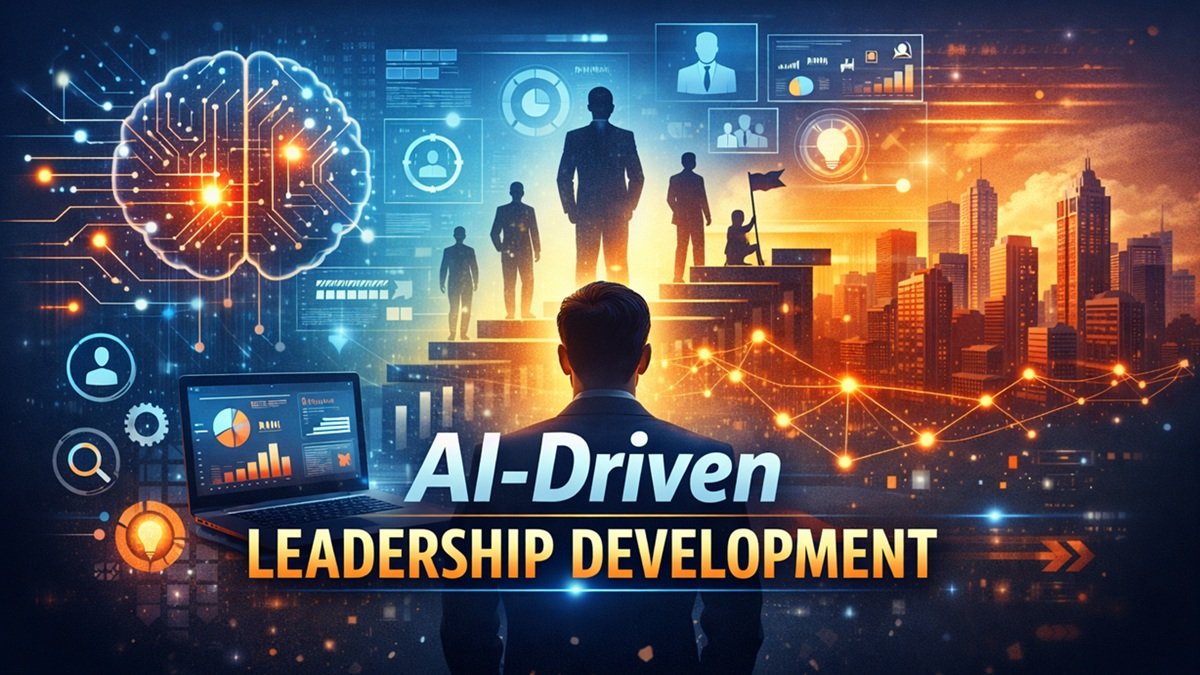
The Role of Artificial Intelligence in Shaping Future Ready Leaders
Recent advancements in artificial intelligence are reshaping leadership development through AI courses. Instead of relying on subjective opinions, AI analyses behaviour, decision making styles, and leadership potential using data driven insights. This approach helps organisations identify and develop future leaders more effectively, creating stronger talent pipelines and supporting long term business growth.
How AI Identifies Future-Ready Leaders
The focus of the analysis lies in the three core competencies that research has identified as essential to the success of leaders in complex environments:
Economic decision-making requires the capacity to weigh strategic decisions and balance competing needs under pressure. AI systems monitor the ways in which individuals address resource allocation decisions, weighing the pros and cons, and staying focused on long-term goals in the face of short-term needs.
Emotional perceptiveness is a skill that covers understanding what people are experiencing, both spoken and unsaid. Emotional perceptiveness is a skill that goes beyond mere empathy and also includes understanding organisational dynamics and how different people might respond to a situation.
Fluid intelligence is a representation of an individual’s ability to adapt their thinking and their approach to solving problems when faced with different situations. Unlike people whose thinking and problem-solving strategies are constant in their application, an individual with fluid intelligence is able to adapt their strategies in accordance with different situations.
The strength of AI-assisted assessment is that it can detect these competencies by observing behavioural patterns instead of relying on self-assessment and manager nomination. One can be highly skilled in emotional intelligence tests but still fail to exhibit empathetic qualities in real-life work scenarios. AI tools detect these manifestations of leadership potential and determine who possesses these genuine qualities to effectively lead teams through uncertain and changing circumstances.
Creating Personalised Leadership Development Through Talent Intelligence
- Talent Intelligence Platforms are revolutionizing the way organizations are looking at leadership development. Organizations are no longer looking at traditional training programs where all individuals in a training class have the same learning experience. Rather, they are looking for a system where all performance data, learning programs, and career development can be brought together in a single system for both managers and employees.
- The AI technology in these systems identifies an individual’s strengths, weaknesses, and interests. These systems then provide learning opportunities that match the individual’s goals with the needs of the organization. This way, the training of the individual is not generic but specific to the needs of the organization.
- Personalisation in these systems extends well beyond just course recommendations. The AI analyzes different data sources, such as performance reviews, peer feedback, behavioural evaluations, and even patterns in how employees are working every day. By aggregating all this data, the AI is able to provide a more balanced and unbiased approach to career growth planning.
- In the past, it was the responsibility of the executive coaches and HR to sift through a tremendous amount of data to gain a proper understanding of leadership potential. This was a time-consuming process, taking weeks to complete, and even then, there was a high probability of missing out on important information. This process is now completed in a matter of seconds by AI-powered systems, which can recognize patterns and areas of development that might not be immediately obvious from various data sets.
- Another significant advantage that AI has in the area of talent intelligence is that it is capable of recognizing connections in skills. This is because AI systems are able to analyze existing skills and then identify how the skills can be used in other positions. For instance, a person with data analysis skills may only need more exposure in leadership skills to be able to move into a strategic role in data-driven decision making.
- This understanding enables professionals to find career opportunities that may not have been clear to them in the first place. It also helps the organization make better use of existing talent rather than always trying to recruit new employees.
- Another significant scalability advantage of AI-based coaching platforms is that it can guide thousands of employees at the same time, thus providing the same level of coaching to different teams and locations around the world. This implies that the level of leadership development is not limited to the executive level of the organization but can extend to other levels of the organization as well.
- Real-time tracking is another important benefit. This allows the organization to track how employees are progressing, identify new skills they need, and so on. This helps to have a more flexible and forward-thinking approach to leadership development, rather than the traditional yearly review process.
The Business Impact of AI-Powered Leadership Development
- Organisations that use AI-driven leadership development strategies observe improvements in their performance and engagement levels among their employees. Employees who derive personal value from AI-supported learning tend to contribute positively towards organisational success.
- AI tools support leaders rather than replace human judgement. This balance helps maintain or improve employee satisfaction while strengthening trust in leadership decisions.
- Employees who receive AI based development recommendations often show higher engagement, stronger motivation, and better long term retention within the organisation.
- AI also strengthens succession planning by preparing internal leaders in advance, reducing hiring costs and avoiding disruptions when leadership transitions occur.
- By analysing complex data patterns, AI helps leaders make better decisions in areas such as resource planning, operations, and strategy, ultimately improving productivity and efficiency.
Key performance improvements include:
- Accelerated decision-making capability in critical business situations
- Reduced time spent on administrative tasks, creating capacity for strategic leadership activities
- Improved employee autonomy through better-prepared leaders who require less oversight
- Stronger alignment between individual development goals and organisational strategic objectives
- Enhanced cross-functional collaboration through leaders who understand broader business contexts
The business impacts escalate when AI is integrated into all organisational development strategies as opposed to being isolated in the HR function. Companies that incorporate AI leadership insights into their business processes reap sustainable competitive advantages through improved leadership capabilities in all their business functions.
What This Means for Your Organisation
Artificial intelligence offers organisations a fundamentally different approach to leadership development—one that moves beyond traditional assessment methods to uncover leadership potential based on behavioural evidence and core competencies.
This shift from intuition-based evaluations to data-driven insights creates opportunities to:
• Identify leadership capabilities that conventional methods often miss • Create development pathways tailored to individual strengths and organisational needs
• Reduce costs associated with succession planning while improving leader preparedness • Generate measurable improvements in decision-making quality across business operations
Organisations that understand how to effectively use AI technologies, especially Artificial intelligence courses, gain access to scalable leadership development strategies across the entire organisation. Instead of limiting leadership programs to a small group of high potential employees, AI for business leaders enables companies to identify, nurture, and develop leadership capabilities across teams, creating a stronger and more future ready leadership pipeline.
Conclusion
Most importantly, however, success in AI-based leadership development programs requires that we consider these programs in the context of a larger commitment to leadership development for the collective—teams, work groups, and organisations. When leadership development is available to more people and is linked to individual development and business success, the benefits can far exceed individual performance enhancements.
The question for organisations today is not whether to explore such capabilities, but the speed at which such capabilities can be effectively deployed. The organisations that can effectively harness AI-based approaches to leadership identification and development will unlock the secret to sustained competitive advantages through better leadership development and succession planning for the future.


