
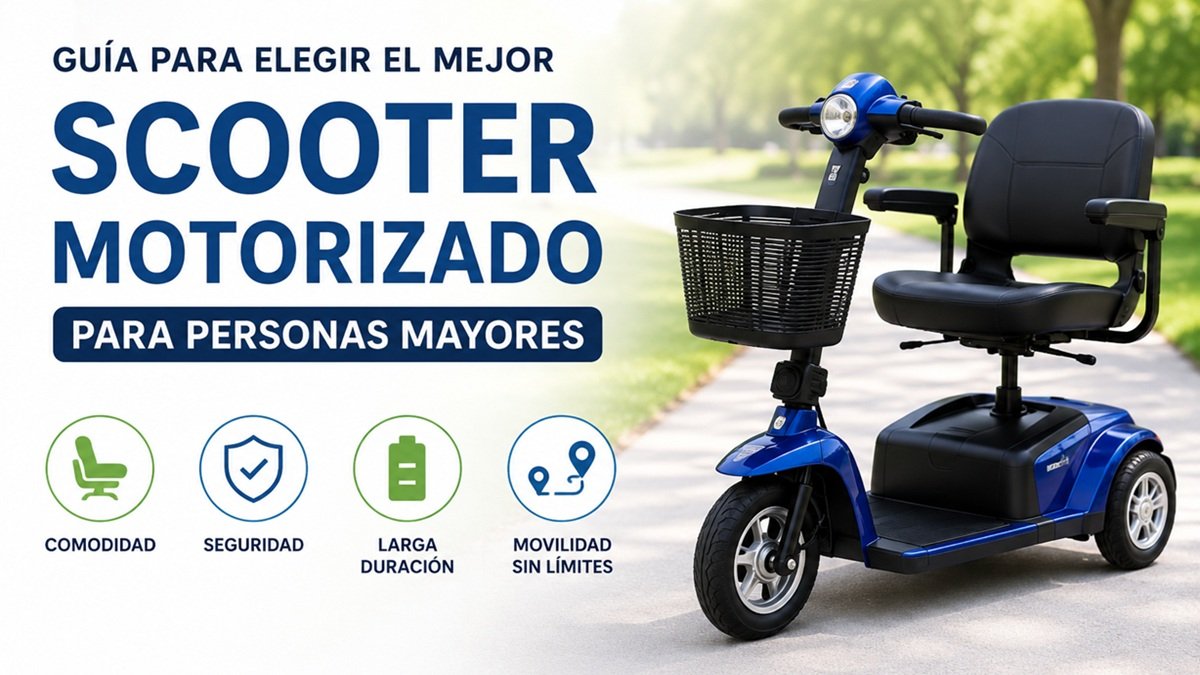
How to Choose a Motorized Scooter for Seniors That Fits Daily Life
The right motorized scooter for seniors fits the rider’s body and daily routes before any spec sheet matters. About 40 percent of U.S. adults aged 65 and older have a mobility disability (Consumer Reports, 2025), and a model that works well for one rider often falls short for another. Shopping by feature list alone, without thinking about doorways or car trunks, usually leads to returns.
What Makes a Motorized Scooter Senior-Friendly
The seat does more for daily comfort than any spec sheet number. A swivel base with adjustable height keeps the knees from straining during the sit-to-stand transition. Controls should work with light thumb pressure, since arthritis affects nearly half of adults over 65 (CDC Arthritis Surveillance, 2023).
Tiller design changes daily ease too. The vertical steering column should tilt forward and back so the wrists stay neutral and the elbows do not lock. A delta-shaped handlebar lets a single thumb push the throttle without a tight grip.
Quiet operation matters more than first-time buyers expect. Indoor use in apartments and retail aisles means a noisy motor draws attention nobody wants. A sealed battery pack rated for at least 300 charge cycles before noticeable capacity loss is a reasonable baseline.
Indoor vs. Outdoor Use
Indoor riders care most about turning radius. A 36 to 40 inch radius clears most doorways and hallway corners cleanly. The foldable Hoverfly T3 3-wheel mobility scooter is sized for this kind of tight-space riding and weighs about 60 lbs when folded.
Outdoor riding shifts the priorities. Higher ground clearance and pneumatic tires absorb sidewalk cracks better than small solid wheels. A 4-wheel frame also resists tipping on cambered driveways.
3-Wheel vs. 4-Wheel Motorized Scooters
Three wheels turn tighter and weigh a few pounds less. Four wheels add a stability base that helps on grass and ramps. Consumer Reports’ 2025 lab testing found some 3-wheel models had less reliable braking on downhill sections, so heavier riders often do better on a four-wheel design like theHoverfly T4 4-wheel mobility scooter.
Weight distribution also changes how a scooter handles a 5 percent slope, the upper limit for accessible sidewalks under ADA guidelines. A four-wheel base spreads load across two rear tires, giving the motor better traction on curb-cuts and parking ramps.
Typical Specs You’ll Compare
| Spec | Travel / Compact | Mid-Size 4-Wheel | Heavy-Duty |
| Weight capacity | 250–300 lbs | 300–330 lbs | 400–500 lbs |
| Range per charge | 8–13 miles | 12–17 miles | 18–35 miles |
| Top speed | 4.0–4.7 mph | 4.5–5.5 mph | 5.8–9.3 mph |
| Scooter weight | 60–90 lbs (folded) | 110–160 lbs | 240–400 lbs |
| Price range | $500–$1,500 | $900–$2,500 | $2,800–$7,000 |
Ranges compiled from current product pages of Pride Mobility, Golden Technologies, Drive Medical, and Afikim (2025–2026).
Safety Features Worth Paying For
Electromagnetic brakes engage automatically when the rider releases the throttle, which prevents rollback on slopes. Anti-tip wheels at the rear keep the chassis stable during sharp turns. LED headlights and a horn become essential once the rider crosses parking lots at dusk.
A removable key and a beep-on-startup matter in households where grandchildren visit, since they keep the scooter from being switched on by accident.
Battery Range and Charging in Real Life
Listed range assumes a flat course and a fresh battery. Real-world range usually lands 20 to 30 percent below the spec, per Consumer Reports’ outdoor course testing. Cold weather drops lithium-ion capacity further, sometimes by another 10 to 15 percent below 40°F.
Lithium-ion packs charge faster and weigh about half as much as a same-capacity sealed lead-acid pack, but they cost more upfront. Lead-acid still appears on lower-priced heavy-duty models because it tolerates deep discharge well. A full top-up generally runs 6 to 10 hours, so charging overnight after any ride longer than two miles is the safe habit.
Cost and Insurance Coverage
Medicare Part B covers a power-operated vehicle as durable medical equipment only when a doctor documents that walking aids will not meet in-home needs (Medicare.gov). Out-of-pocket pricing typically runs $800 to $4,000, with premium all-terrain models reaching $7,000. Many sellers offer financing or rent-to-own.
Test a model for fit before buying when possible. A 30-day return window is a fair baseline expectation in the U.S. market.
FAQs
What is the best motorized scooter for seniors who travel often?
A foldable 3-wheel model under 60 lbs is the best fit. It packs into most car trunks and meets airline cargo rules. A range of at least 10 miles covers a day of errands without recharging.
Are motorized scooters safe for seniors with limited hand strength?
Yes, when the scooter has light-touch thumb throttles and an adjustable speed dial. The tiller height should also adjust to keep the wrists neutral. Test the controls in person before buying if possible.
How long does a motorized scooter for seniors last?
A well-maintained scooter typically lasts 5 to 10 years. Battery packs usually need replacement every 2 to 3 years depending on charge cycles. Routine tire and brake checks extend the frame’s working life.


